Guide
How plastic credits are verified: standards, registries and audits

On this page 9 sections
A certificate means little on its own. What matters is the work behind it and whether someone independent can check that work. My engineering background makes me want to see the process, not only the paperwork.
This guide explains who does the checking, what they check and how you can check a credit yourself. If you are new to the topic, start with What is a plastic credit?.
Three roles that should never be the same organisation
Every credible scheme separates three jobs.
The standard-setter writes the rules: what counts as additional, how to measure tonnes, which end destinations are acceptable and how to treat workers.
The auditor, usually called a validation and verification body (VVB), checks a project against those rules. It should be independent of the project and approved by the standard.
The registry records each credit with a serial number, who holds it and when it is retired.
A project developer runs the collection or recycling. A buyer pays for credits and retires them. When the same company writes the rules, checks its own projects and keeps the only record, you are relying on trust, not evidence.
How verification works under Verra
Verra runs the most widely referenced plastic standard, the Plastic Waste Reduction Standard, launched in 2021. The steps:
Project description and public comment. The developer describes the project and how it will measure plastic. The description goes out for public comment.
Validation. A VVB approved by Verra checks the design against the standard and the methodology the project uses.
Registration. Verra reviews the validation and registers the project.
Monitoring. The project collects or recycles plastic and records it: weights, sources, destinations.
Verification. A VVB checks the monitoring data for the period. Verra approves the verification.
Issuance. Verra issues credits on the Verra Registry. Each credit stands for one tonne of plastic waste, either collected (Waste Collection Credit) or recycled (Waste Recycling Credit) beyond the project's baseline.
Two methodologies set the measurement rules: PWRM0001 for collection and PWRM0002 for recycling. Verra also oversees its VVBs and can require them to correct problems.
Other schemes you will meet
| Scheme | Who runs it | Unit | Independent check | Public record |
|---|---|---|---|---|
| Plastic Waste Reduction Standard | Verra | 1 tonne | Verra-approved VVB at validation and verification | Verra Registry |
| Plastic Pollution Reduction Standard (PPRS) | PCX Solutions | set by the standard; check per project | Accredited VVB required for registration and issuance since version 8 (June 2024) | PPRS Registry |
| Circular Credits Mechanism | BVRio / Circular Action Hub | varies by material | Verification contracted before credits are allocated; audit documents linked in the registry | Circular Action Hub issuance and transaction registries |
| Ocean Bound Plastic (OBP) certification | Zero Plastic Oceans, certified by Control Union | certificates and OBP credits | Control Union audit against the OBP standards | Control Union list of certified organisations |
Some companies also run their own systems with outside assurance. CleanHub, for example, announced in January 2023 that TÜV SÜD had verified its data process against ISO 14064-3. That checks the data process, not each tonne against a crediting standard. Both approaches have value; a buyer should know which one applies.
What an auditor checks
Rules differ, but a good audit covers the same ground:
Additionality. Would the collection or recycling have happened anyway? The project has to show its baseline and why credit revenue changes the outcome.
Quantity. Weighbridge tickets, scales, delivery notes and photos that add up to the tonnes claimed.
Chain of custody. Where the plastic came from, where it went next, and documents from the next site in the chain.
End destination. Recycled, co-processed as fuel or landfilled. Collection is not recycling, and what happens to collected plastic changes what you can say about it.
No double counting. The same tonne cannot appear in two schemes, in a national extended producer responsibility (EPR) system and a voluntary credit, or in two buyers' claims.
Social safeguards. How collectors are paid and protected, especially informal waste workers.
How I look at a project
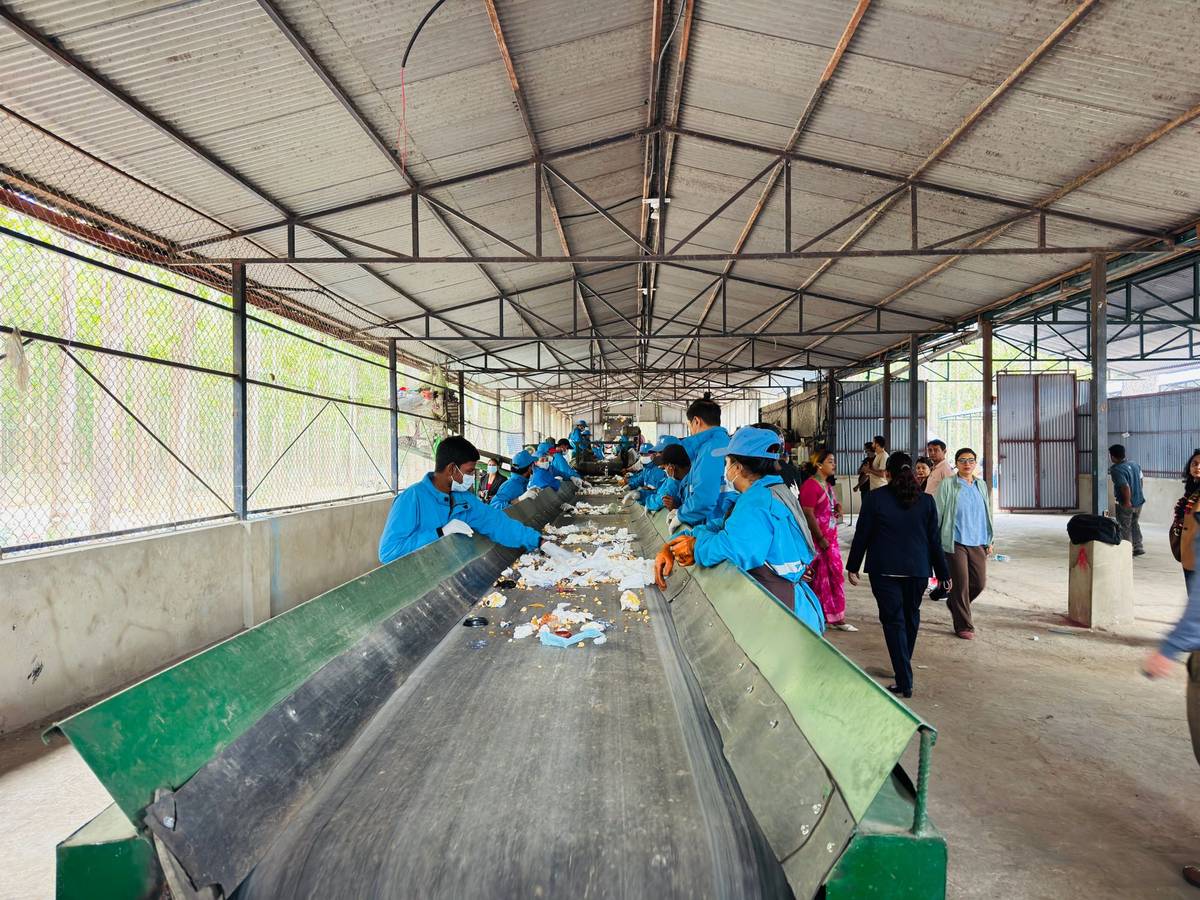
My first question is what happens to the plastic, step by step: who collects it, how it is sorted and weighed, where it goes next and what evidence supports each step. Collecting a material and making it useful again are different challenges, and I learned that working with plastic in production. Then I look at the people: how workers are treated and paid, and whether the project makes sense for the community around it.
A verified credit answers those questions with documents. A visit helps me understand them. We have visited OAR, one of our partners in India, several times for that reason.
How to check a credit yourself
Ask for the standard and the project ID. "Verified" without a named standard tells you nothing.
Find the project on the registry. Check the location, the material, the dates and whether the credits are collection or recycling.
Read the latest verification report. Who audited it, when, and what did they find?
Match the serial numbers. Your credits should appear as retired in your name, or in the name of whoever made the claim on your behalf.
Check the end destination. The report should say what happened to the plastic.
Word your claim to match the evidence. For example: "we funded the collection of 20 tonnes of flexible plastic in Ghana, verified under Verra's Plastic Program". My rule: a claim should never be bigger than the work. Our guide to buying plastic credits responsibly covers the wording.
If a seller cannot give you these, ask why. Good projects are glad to show their evidence, and asking is part of getting involved responsibly.
Where verification still falls short
Plastic has no equivalent of the Integrity Council for the Voluntary Carbon Market, which sets a common quality benchmark for carbon credits. Schemes use different units and accept different destinations, so one tonne does not always equal another. Some critics argue that weight alone cannot capture the harm different plastics cause. Weight tells only part of the story, which is why location, material and treatment belong in every report. The comparison with carbon credits explains where plastic can learn from carbon's mistakes.

Verification is getting stricter. PCX made independent auditors mandatory in 2024. In August 2024 Verra issued version 1.1 of both plastic methodologies, with clearer guidance on how projects show they go beyond what EPR laws already require. A buyer who asks the questions above helps that continue.
The Reclaim Earth newsletter
Follow the plastic, not the promises.
One email a month on plastic recovery.
Updates from our partner projects, plain-English explainers on plastic credits, and the questions worth asking of any plastic claim. Free, and you can unsubscribe at any time.
Sign-ups are handled by Substack. See Substack's privacy policy, our privacy notice and our cookie notice.
Frequently asked questions
Who verifies plastic credits?
Independent auditors approved by each standard, usually called validation and verification bodies (VVBs). The standard-setter oversees them; it does not audit its own projects.
Is Verra the only plastic credit standard?
No. Others include PCX Solutions' Plastic Pollution Reduction Standard, BVRio's Circular Credits and Ocean Bound Plastic certification. Some companies use their own systems with outside assurance.
What is a plastic credit registry?
A public database that records each credit with a serial number, its project, its owner and its retirement, so the same credit cannot be sold or claimed twice.
What does it mean to retire a plastic credit?
The holder cancels it on the registry, usually in the name of the company making a claim. A retired credit cannot be sold or used again.
Can a plastic credit prove that plastic was recycled?
Only a recycling credit, or a collection credit with documented recycling, can. A collection credit on its own proves collection and appropriate management, which may include controlled landfill or energy recovery.
Sources
- Verra, Plastic Program details
- Verra, Plastic Program frequently asked questions
- Verra, Plastic Waste Reduction Standard v1.0 (February 2021)
- Verra, active Plastic Program methodologies (PWRM0001, PWRM0002)
- SCS Global Services, Verra Plastic Waste Reduction Standard brochure
- Carbon Pulse, PCX Solutions releases updated plastic credit standard, mandates third-party verification (2024)
- TÜV SÜD, accredited for the Plastic Pollution Reduction Standard (May 2024)
- Circular Action Hub (BVRio), project cycle
- Circular Action Hub, registry
- Control Union, Ocean Bound Plastic certification
- Verra, Corrections and clarifications to Plastic Program documents (PWRM0001 and PWRM0002 v1.1, August 2024)
- CleanHub, CleanHub becomes the first plastic credit system verified by TÜV SÜD (January 2023)
- WWF, Position on plastic crediting and plastic neutrality
Published by Reclaimed Earth Limited (Companies House 17392812), which works with plastic recovery projects in India, Indonesia and the Philippines and has a commercial interest in plastic credits. OAR is a Reclaimed Earth partner. Edited with the Reclaimed Earth editorial team. Last updated 20 October 2026.