
Guide
What is a plastic credit? A plain guide

On this page 11 sections
- The short version
- How a credit is made
- Collection credits and recycling credits
- Who does what
- Where plastic credits are used
- What a plastic credit is not
- Where the critics are right, and where they are not
- The questions I ask before trusting a credit
- Where a business should start
- Frequently asked questions
- Sources
I started paying attention to plastic long before I knew plastic credits existed. When I was young I joined beach clean-ups and we recorded what we collected. Once you start counting, you look at a beach differently. You still see a place you love, but you also see what has been left behind or washed ashore. I have spent much of my life on the water since then, sailing, diving, kiting and surfing, and that feeling has never left me.
The credits came later, through work. I worked in tech and manufacturing, including medical production, so I knew carbon credits and I had seen how much plastic industry uses. Then my business partner, who is from India and lives in Berlin, came across a plastic collection project there. His question was practical: how could we fund this? That question, and the ambition to fund that kind of work, became Reclaimed Earth.
Plastic credits are one way to turn that ambition into action, helping fund the collection and recycling of plastic waste. Below, I explain how they work, the opportunities they create, and what it takes to get them right.
The short version
A plastic credit is a way for a business to pay towards collecting or recycling a measurable amount of plastic waste, with proof that the work has been done. It helps fund clean-up. You still need to reduce the plastic you use.
In practice it works like this:
A project collects plastic waste that would otherwise be burned in the open, dumped or washed into a river.
The project measures how much it collects or recycles beyond its usual level (the baseline).
An independent auditor checks the records.
A standard issues credits for the verified tonnes on a public registry: one credit per tonne under the best-known standard.
A company buys credits, which pays for the work, and then retires them, so they can never be used again.
Scattered, dirty, low-value plastic, such as sachets and thin films, costs more to collect than it is worth to a recycler. Without extra money, collectors leave much of it where it is.
How a credit is made
Baseline. A project first has to show what would happen without it. Verra, which runs the most cited plastic standard, issues credits only for plastic "collected and appropriately managed above what would have happened in the absence of the project" (Verra, Plastic FAQ). A business that was already collecting a material and selling it on to a recycler should not earn credits for doing the same thing.
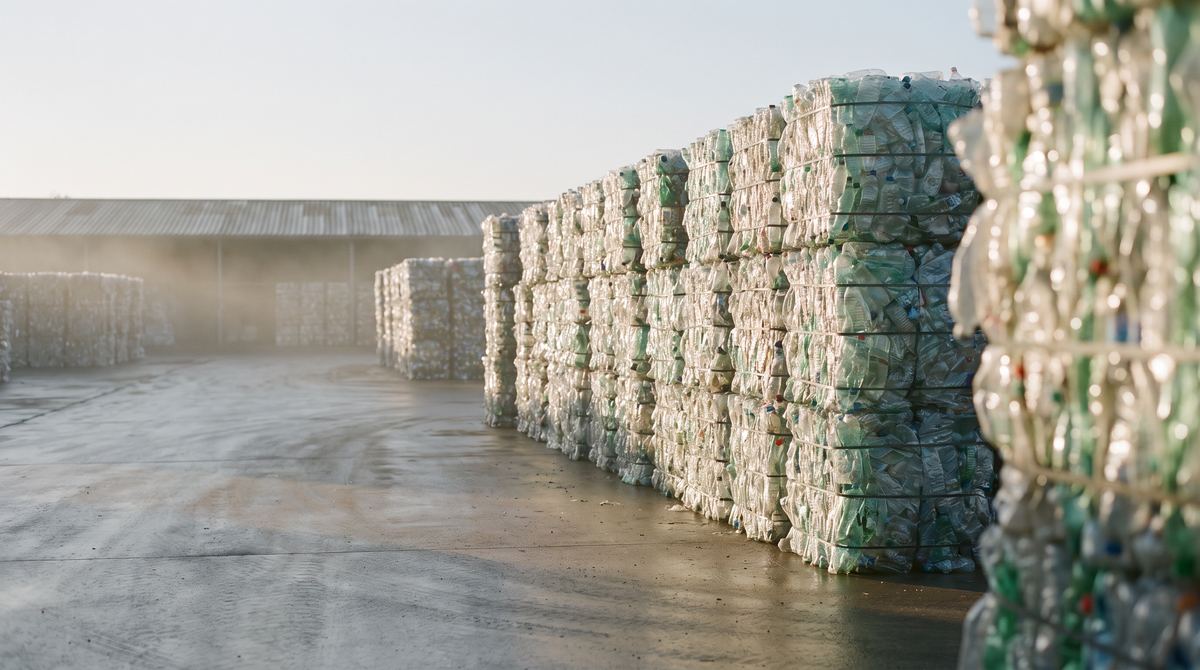
Collection or recycling. Waste pickers, collection centres, municipal crews or recyclers gather the plastic. Good projects keep weighbridge tickets, photos, GPS data and records of where every load went.
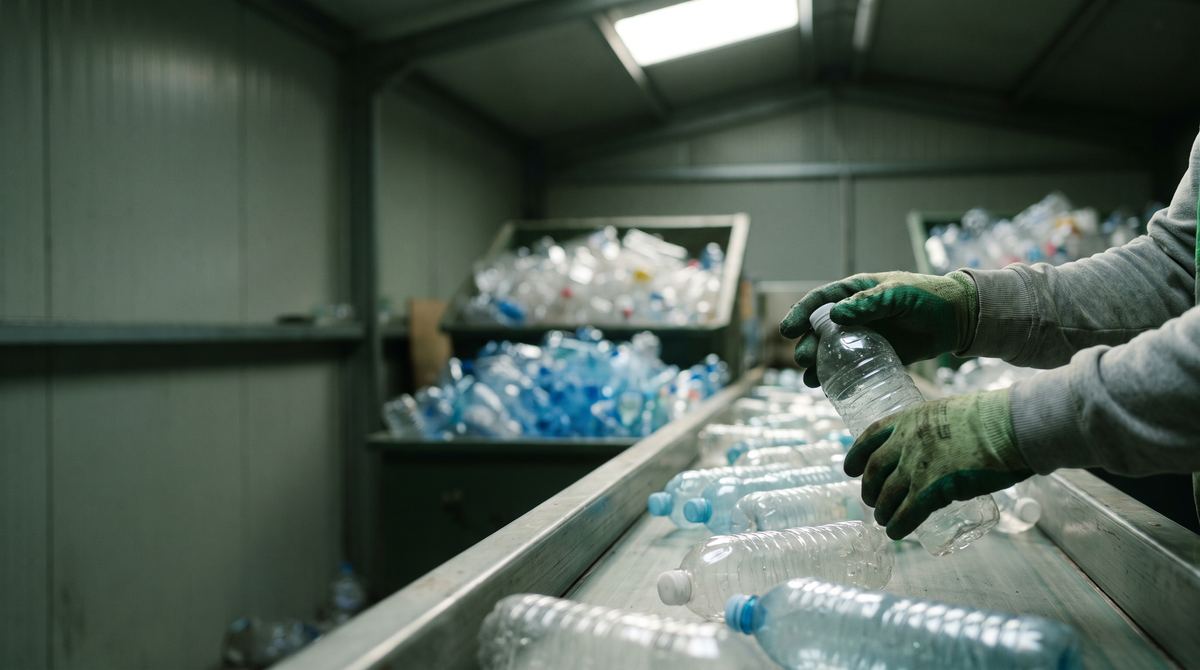
Verification. An auditor accredited by the standard checks that evidence. Under Verra, independent validation and verification bodies do the checking; Verra itself does not develop projects or set prices.
Issuance and retirement. Credits appear on a public registry with serial numbers. When a buyer retires a credit, the registry shows who used it and for what. That is what stops the same tonne being claimed twice.
Collection credits and recycling credits
Verra issues two kinds of credit, each for one tonne:
Waste Collection Credits for plastic collected from places where it would leak, then taken to a managed destination.
Waste Recycling Credits for plastic recycled above the baseline recycling rate.
Collection alone does not prove the material became a new product. Verra accepts controlled landfill or incineration with energy recovery as proper management for collection credits (Verra, Plastic FAQ). Both beat a river. Neither is recycling, and a buyer should know which one it paid for.
Who does what
| Role | What they do | Examples |
|---|---|---|
| Standard-setter | Writes the rules: baselines, measurement, what counts | Verra (Plastic Waste Reduction Standard); BVRio (Circular Credits) |
| Registry | Records each credit, its owner and its retirement | Often run by the standard-setter |
| Auditor | Checks a project's evidence before credits are issued | Accredited validation and verification bodies |
| Project developer | Runs or organises collection and recycling on the ground | Collection networks, recyclers, social enterprises |
| Collectors | Do the physical work | Waste pickers, municipal workers, collection centres |
| Buyer | Pays for credits and retires them | Brands, retailers, packaging users |
| Intermediary | Connects buyers and projects | Brokers, platforms, producer responsibility organisations |
Where plastic credits are used
Voluntary use. Most credits are bought by companies that want to fund collection alongside their own efforts to cut plastic. Nothing forces them to.
Under national law. Some countries link credits, or something close to them, to legal duties:
- The Philippines. The Extended Producer Responsibility Act of 2022 (Republic Act 11898) requires large brand owners, manufacturers and importers to recover a rising share of the plastic packaging they sell, from 20 per cent in 2023 to 80 per cent by 2028. Many meet it through producer responsibility organisations that use plastic credits (Down To Earth; Arab News/AFP).
- India. The Plastic Waste Management (Amendment) Rules 2022 set up extended producer responsibility with targets for rigid, flexible, multilayer and compostable packaging. Registered recyclers generate EPR certificates on a Central Pollution Control Board portal. These are regulated compliance certificates, not voluntary plastic credits.
- The United Kingdom. Voluntary plastic credits do not reduce Plastic Packaging Tax or packaging EPR fees. A UK business that buys them keeps every legal obligation it had before.
What a plastic credit is not
It is not a carbon credit. A carbon credit stands for a tonne of carbon dioxide equivalent avoided or removed. A plastic credit stands for a tonne of plastic waste collected or recycled. They measure different things.
It is not proof that your own packaging was recovered. The credited tonne is usually different plastic, often in another country.
It does not cancel out your plastic. WWF does not support "plastic neutral" or "plastic neutrality", because those terms do not convey the real environmental impact (WWF position paper). I agree, and I avoid "plastic neutral", "zero impact" and "saving the planet" too. They are big claims with little weight in the real world. I would rather tell you what we collected, who did the work and what we learned.
Where the critics are right, and where they are not
I think much of the criticism is fair.
- Credits can become a marketing shortcut. If a business pays for collection but makes no effort to reduce unnecessary plastic, people are right to question it.
- There is no single standard. WWF has noted there is no formal definition of plastic crediting. Schemes differ in units, in what counts as additional and in which end destinations they accept.
- Not every tonne is equal. A 2025 study in One Earth by Moon and colleagues argues that one global metric cannot capture the different harms of different plastics, and that credits risk repeating carbon's failures on additionality and permanence.
- Where the plastic ends up. Much low-value plastic is burned in cement kilns as fuel. It keeps plastic out of rivers but releases emissions, and some campaigners call it a false solution.
- People. Waste pickers do the hardest work. Whether money reaches them, and whether they work safely, depends on the project.
I think it is unfair to dismiss every project because some claims are weak. There is plastic waste that needs collecting now, and the people doing that work need funding. A well-evidenced project helps those people and keeps plastic out of rivers. My rule: a claim should never be bigger than the work.
The questions I ask before trusting a credit
My first question: can you show me what happens to the plastic? I want to understand the whole journey: who collects it, how it is weighed and recorded, where it goes next and what evidence supports each step. Where I can, I want to see it first-hand. I have visited OAR, one of our partner projects in India, several times for that reason.
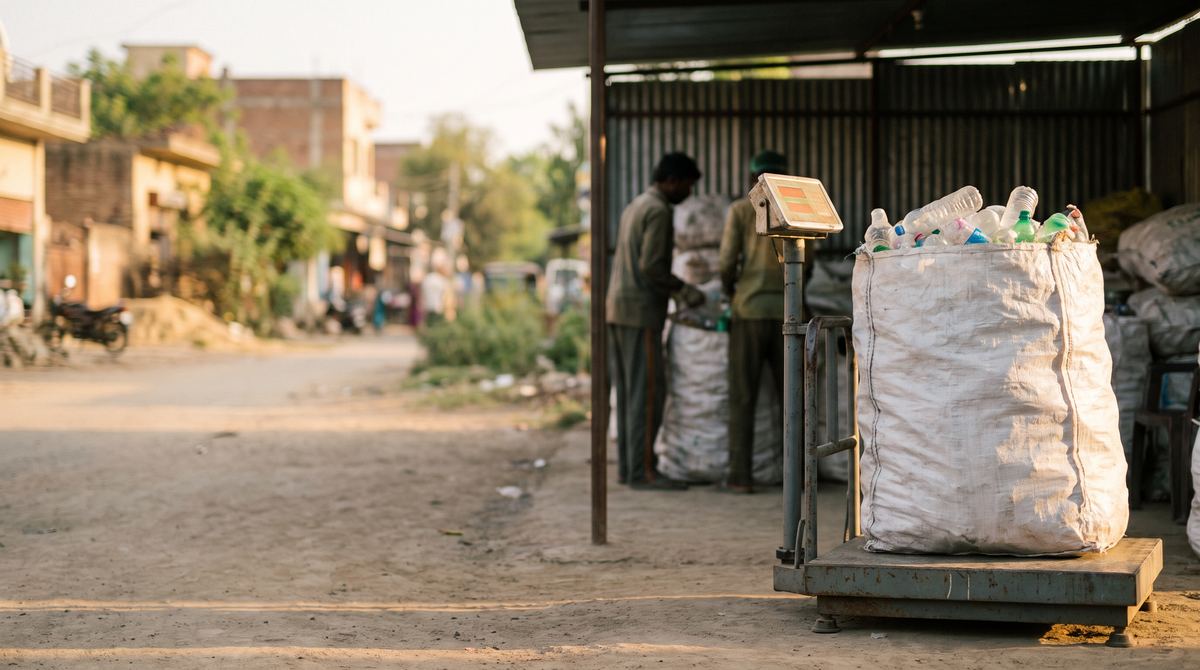
Then I look at the people. How are workers treated and paid? Does the project make sense for the community around it? My engineering background makes me curious about the process, but the people doing the work matter as much to whether that process is credible.
As a checklist:
Named standard and public registry. You can look up the serial number and see who retired it.
Additionality shown. The project explains its baseline and why the collection would not happen without credit revenue.
Clear end destination. Recycled, co-processed or landfilled, stated for each tonne.
Independent audit. By an accredited body, with a date.
Fair treatment of collectors. Pay, safety equipment and conditions described and, where possible, checked.
Honest claims. A specific statement, for example "we funded the collection of 50 tonnes of flexible plastic in Manila", not "we are neutral".
Reduction first. The buyer is cutting its own plastic too.
Where a business should start
Start with your own business. Understand where you use plastic, where you can reduce it and where reuse is possible. Credits come after that. They fund recovery you cannot do yourself.

Ask hard questions of us and of anyone else selling credits. Asking is part of getting involved responsibly. I want you to feel you can contribute, and to stand behind what you say about it.
The Reclaim Earth newsletter
Follow the plastic, not the promises.
One email a month on plastic recovery.
Updates from our partner projects, plain-English explainers on plastic credits, and the questions worth asking of any plastic claim. Free, and you can unsubscribe at any time.
Sign-ups are handled by Substack. See Substack's privacy policy, our privacy notice and our cookie notice.
Frequently asked questions
How much plastic is one plastic credit?
Under Verra's standard, one tonne collected or recycled above the baseline. Other schemes use different units, so check the standard.
Who issues plastic credits?
Standard-setters with registries, such as Verra, after an independent auditor checks a project's evidence.
Are plastic credits the same as EPR certificates?
No. India's EPR certificates are created under national law to meet legal recycling targets. Voluntary plastic credits sit outside that system. In the Philippines, credits can be used through producer responsibility organisations to meet obligations under RA 11898.
Can a UK company use plastic credits to reduce its Plastic Packaging Tax?
No. They have no effect on Plastic Packaging Tax or packaging EPR fees.
Are plastic credits greenwashing?
They can be, for example with claims such as "plastic neutral". With a named standard, a public registry, an honest claim and real reductions alongside, they pay for collection that would not otherwise happen.
Sources
- Verra, Plastic Program frequently asked questions
- Verra, Five things you should know about plastic credits
- WWF, Position on plastic crediting and plastic neutrality
- Moon, S. et al. (2025), "Unpacking plastic credits", One Earth; summary by the Alfred Wegener Institute
- Down To Earth, EPR in Asia-Pacific: the Philippines
- Arab News / AFP, "To tackle plastic scourge, Philippines makes companies pay"
- GIZ / CPCB, EPR portal for plastic packaging (India)
- Wikipedia, Plastic credit
Published by Reclaimed Earth Limited (Companies House 17392812), which works with plastic recovery projects in India, Indonesia and the Philippines and has a commercial interest in plastic credits. Edited with the Reclaimed Earth editorial team. Last updated 18 October 2026.