
Guide
Plastic credits vs carbon credits: what's the same and what isn't

On this page 8 sections
People who first hear about plastic credits often ask: is this carbon credits for plastic? I understand why. The shared word "credit" suggests they do the same job. They share a design and sometimes the same organisations, but they measure different outcomes. A cleaner coastline and a more stable climate both matter, and you should describe each one honestly.
My own view comes from manufacturing, from beach clean-ups and from visiting projects such as OAR, one of our partners in India. I know carbon credits through business, not from running carbon projects. Below I set out what the two have in common, where they part ways and what plastic can learn from thirty years of carbon credits.
Side by side
| Aspect | Carbon credit | Plastic credit |
|---|---|---|
| Unit | 1 tonne of CO₂-equivalent avoided or removed | 1 tonne of plastic waste collected or recycled (under Verra; other schemes vary) |
| What it measures | A global gas: a tonne emitted anywhere has the same effect on climate | A local material: harm depends on the type of plastic and where it ends up |
| Since | Kyoto Protocol, adopted 1997, in force 2005 | Early schemes from the 2010s; Verra's plastic standard from 2021 |
| Rules under international law | Yes: Kyoto's Clean Development Mechanism, now Article 6 of the Paris Agreement | No international mechanism; some national EPR laws (e.g. Philippines) let companies use credits |
| Integrity body | Integrity Council for the Voluntary Carbon Market (ICVCM), Core Carbon Principles | None yet |
| Key tests | Additionality, permanence, no double counting, measurement | The same tests, plus where the plastic ends up and how waste pickers are treated |
| Main criticism | Credits that did not deliver the claimed cuts | Weak, inconsistent standards; burning plastic as fuel; credits replacing reduction |
A short history of carbon credits
Kyoto and the Clean Development Mechanism. Governments adopted the Kyoto Protocol in December 1997, and it entered into force in February 2005. Its Clean Development Mechanism let countries with emission targets pay for emission-cutting projects in developing countries and count the resulting certified emission reductions towards their targets. Each one represented a tonne of CO₂-equivalent. By 2012 the mechanism had issued its billionth credit (UNFCCC).
The voluntary market. Alongside the treaty system, companies began buying credits to meet their own climate pledges. Private standards such as Verra's Verified Carbon Standard and the Gold Standard wrote methodologies, accredited auditors and ran registries.

The Paris Agreement. Article 6.4 of the Paris Agreement created a new UN crediting mechanism. Its units, A6.4ERs, also represent one tonne of CO₂-equivalent, and old CDM projects began moving across in 2024.
The integrity crisis. In January 2023 an investigation by The Guardian, Die Zeit and SourceMaterial concluded that more than 90% of the rainforest credits it examined from Verra were likely "phantom credits" that did not represent real reductions. Verra disputed the methods and findings. Whatever the final verdict, trust in voluntary credits fell. The market responded by tightening rules: the ICVCM published its Core Carbon Principles in 2023 and approved the first methodologies under them in 2024, so credits that meet the bar carry a label on the registry.
- 1997Kyoto Protocol adopted
- 2005Kyoto Protocol in force; Clean Development Mechanism credits
- 2012CDM issues its billionth credit
- 2021Verra's plastic standard
- 2023Investigation questions rainforest credits; ICVCM publishes Core Carbon Principles
- 2024First ICVCM-approved methodologies; CDM projects start moving to Article 6.4
- 27 Sep 2026EU ban on product claims such as "carbon neutral" that rely on offsetting
What plastic credits borrowed
Plastic schemes took the core design almost unchanged:
A standard unit: one tonne.
A baseline: credits only for what goes beyond business as usual.
Additionality: the project must show the work would not happen without credit revenue.
Independent verification by accredited auditors.
A registry with serial numbers.
Retirement, so one party uses each credit once.
Sometimes the institutions are the same too. Verra, the largest carbon standard, also runs the Plastic Waste Reduction Standard, developed with the 3R Initiative.
Where the two part ways
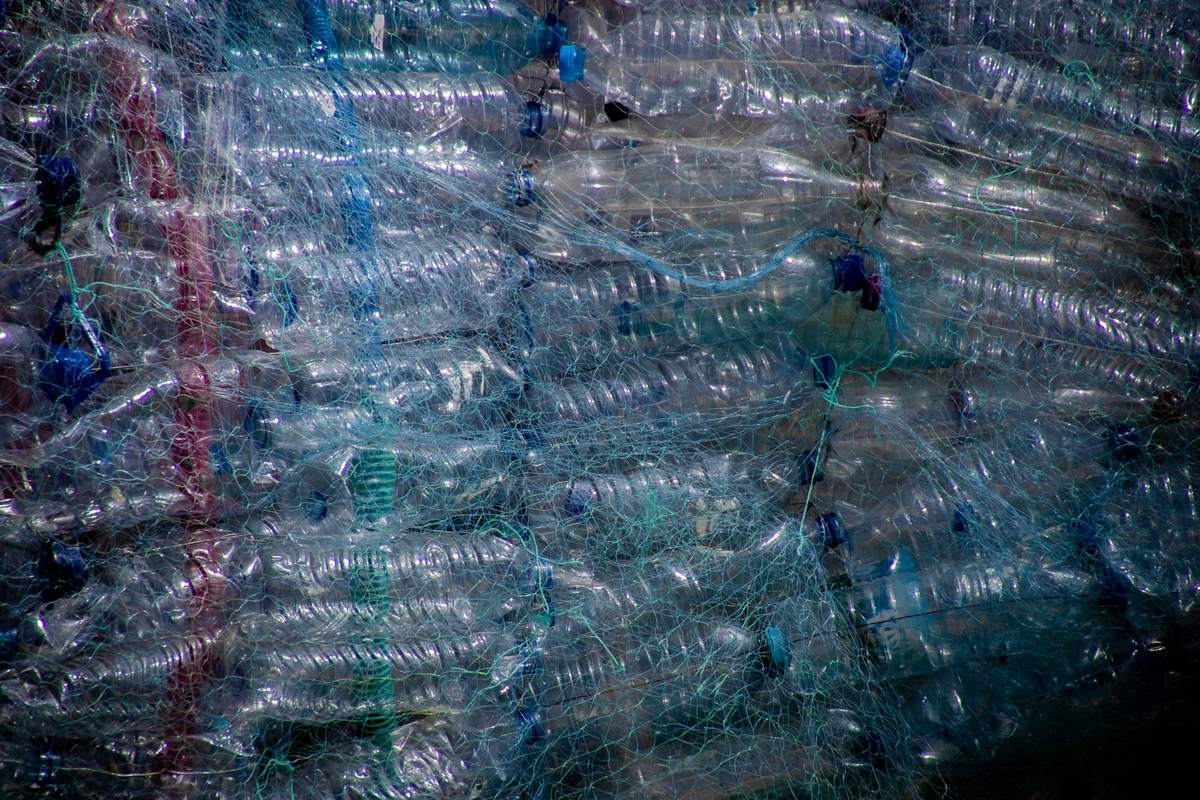
1. One tonne of plastic differs from the next. A tonne of CO₂ has the same effect on the climate wherever it is emitted. A tonne of PET bottles and a tonne of multilayer sachets have little in common: recyclers want the first, and almost nobody buys the second. A tonne leaking into a river in Manila does different harm from a tonne in a managed landfill in Europe. A 2025 study in One Earth by Moon and colleagues calls tonne-for-tonne equivalence a fallacy for this reason.
2. Where the plastic ends up. For carbon, permanence asks whether stored carbon stays stored. For plastic, the matching question is what happened to the waste after collection: recycled into new products, burned in a cement kiln as fuel, or put in landfill. Some standards count all three. They are different outcomes, and a buyer should know which one it paid for. From my time working with plastic in production, I know that collecting a material and making it useful again are separate challenges. A collection credit proves the first, not the second.
3. Plastic credits can't make plastic use disappear. Companies often use carbon credits to "offset" emissions, a practice that is itself contested. With plastic the idea is weaker still. Funding collection in one place does not remove a company's packaging from the environment somewhere else. WWF does not support the terms "plastic neutral" or "plastic neutrality" for this reason.
4. People sit at the centre. In Asia, Africa and Latin America, informal waste pickers do much of the collecting. A credible plastic credit has to answer questions most carbon projects never faced: who did the work, what were they paid, were they safe? When I judge a project, the material, the local infrastructure and the people doing the work carry as much weight as the paperwork.
5. A different link to the law. Carbon credits grew up under international treaties. Plastic credits are growing up inside national extended producer responsibility laws. In the Philippines, the EPR Act of 2022 lets companies meet recovery targets through organisations that use credits. India runs its own regulated system of EPR certificates. No global plastic credit mechanism exists, and negotiations on a UN plastics treaty have not created one.
What plastic should learn from carbon
The lesson I would put first: keep the claims in proportion to the work. A business should be able to explain what its money funded and show evidence that it made something happen beyond what would have happened anyway. When projects deliver, there is a good story to tell, and you build trust by being specific about those results.
The rest follows from that:
Write strict rules early. Carbon's integrity crisis came from methodologies that were too generous about baselines. Plastic standards can set conservative baselines from the start.
Make everything public. Registries, audit reports and end destinations should be open to anyone, not only buyers.
Drop "neutral" claims. Since 27 September 2026, EU law bans product claims such as "carbon neutral" that rely on offsetting, and the UK's Competition and Markets Authority can fine companies for misleading green claims. Plastic should skip that phase.
Separate the good from the rest. Carbon needed an independent integrity council. Plastic will need something similar, or at least common principles that standards sign up to.
Keep reduction first. Credits work best as funding for collection that would not otherwise happen, on top of real cuts in a business's own plastic use.
What to ask before you buy either
Stop assuming all credits tell the same story. Look past the certificate to the project, the people and the outcome.
If a company asked me which credit it needs, I would start with its goal. Then I would explain what each credit measures, what evidence supports it and what the company can fairly say about its contribution. I want you to feel confident asking those questions, and to support work you can believe in and talk about clearly.
What I hope we create lasts: cleaner waterways, fair treatment for workers, and materials that stay in use.
The Reclaim Earth newsletter
Follow the plastic, not the promises.
One email a month on plastic recovery.
Updates from our partner projects, plain-English explainers on plastic credits, and the questions worth asking of any plastic claim. Free, and you can unsubscribe at any time.
Sign-ups are handled by Substack. See Substack's privacy policy, our privacy notice and our cookie notice.
Frequently asked questions
Is a plastic credit the same as a carbon credit?
No. A carbon credit represents a tonne of CO₂-equivalent avoided or removed. A plastic credit represents a tonne of plastic waste collected or recycled. They share a design but measure different things.
Does a plastic credit reduce carbon emissions?
Not directly, and nobody should count it as a carbon reduction. Using recovered material in place of virgin plastic may lower emissions, but the result depends on the polymer, processing energy, transport and the production it replaces. You cannot convert plastic tonnage into carbon credits with a universal multiplier.
Can one project earn both plastic and carbon credits?
Possibly, for different parts of an activity under different standards, but nobody may count the same benefit twice. Check the rules of both standards.
Is there an international body for plastic credits like the ICVCM for carbon?
Not yet. Standards set their own rules, and WWF has noted there is no common definition of plastic crediting.
Why do people compare plastic credits to early carbon credits?
Because they use the same tools and face similar questions about additionality, verification and honest claims, at an earlier stage.
Sources
- UNFCCC, CDM passes one billionth certified emission reduction
- UNFCCC, Article 6.4 mechanism
- Carbon Brief, summary of the Guardian / Die Zeit / SourceMaterial investigation (January 2023)
- Verra, response to the Guardian article
- Verra, first ICVCM CCP labels on the Verra Registry
- ESG Today, ICVCM approves first CCP-labelled credits
- Verra, Plastic Program
- Moon, S. et al. (2025), "Unpacking plastic credits", One Earth; AWI press release
- WWF, Position on plastic crediting and plastic neutrality
- EU Directive 2024/825, Empowering Consumers for the Green Transition
- UK Competition and Markets Authority, Green Claims Code
- Down To Earth, EPR in Asia-Pacific: the Philippines
Published by Reclaimed Earth Limited (Companies House 17392812), which works with plastic recovery projects in India, Indonesia and the Philippines and has a commercial interest in plastic credits. Edited with the Reclaimed Earth editorial team. Last updated 19 October 2026.