
Guide
The Great Pacific Garbage Patch: what it is (it isn't an island)

On this page 8 sections
The phrase "plastic island" puts a solid picture in your head: a mass of rubbish floating together, big enough to stand on. Years of sailing, diving and surfing, and an interest in science, have taught me to think more about the plastic you cannot see, the fragments and microplastics, than about the bottles on the surface. What you see from a boat tells you only part of the story.
Below I explain what the patch is, how big it is, what it is made of, where the plastic comes from and whether anyone can clean it up.
Not an island, more like pepper in soup
The US National Oceanic and Atmospheric Administration (NOAA) calls "patch" a misleading nickname. There is no island of trash, and satellites and aerial photographs cannot show it. NOAA compares the debris to flecks of pepper spread through a bowl of soup, rather than a layer of fat on top. You could sail through parts of the patch and see very little.
Most of the pieces are small. They also sit at every depth, from the surface down through the water column to the sea floor.
Why it forms there
The patch sits inside the North Pacific Subtropical Gyre, a huge system of rotating currents. NOAA describes gyres as big whirlpools that pull objects in. Anything that floats into the gyre tends to stay there, drifting and breaking into smaller pieces under sun and waves.
The Pacific has company. Plastic gathers in gyres in every major ocean basin, and NOAA stresses that there are many garbage patches, not one.
How big is it?
The best-known estimate comes from Lebreton and colleagues, published in Scientific Reports in 2018. The team, which included researchers from The Ocean Cleanup, combined vessel surveys with more than 7,000 aerial photographs and a computer model.
| Measure | Estimate (Lebreton et al., 2018) |
|---|---|
| Area | about 1.6 million km² |
| Floating plastic mass | at least 79,000 tonnes (range 45,000 to 129,000) |
| Number of pieces | about 1.8 trillion (range 1.1 to 3.6 trillion) |
| Share of mass from pieces larger than 5 cm | more than three-quarters |
| Share of mass that is fishing nets | at least 46% |
| Microplastics (under 5 mm) | 8% of the mass, 94% of the pieces |
For scale, 1.6 million square kilometres is about six and a half times the area of the United Kingdom. The authors found four to sixteen times more plastic than earlier estimates, mainly because aerial photos counted large debris better than boat surveys. They also concluded that plastic in the patch was growing exponentially, faster than in the surrounding waters.
Two cautions. These are model estimates with wide ranges, not a weighing of every piece. And an organisation that builds clean-up systems carried out part of the study, which the authors disclose.
What it is made of
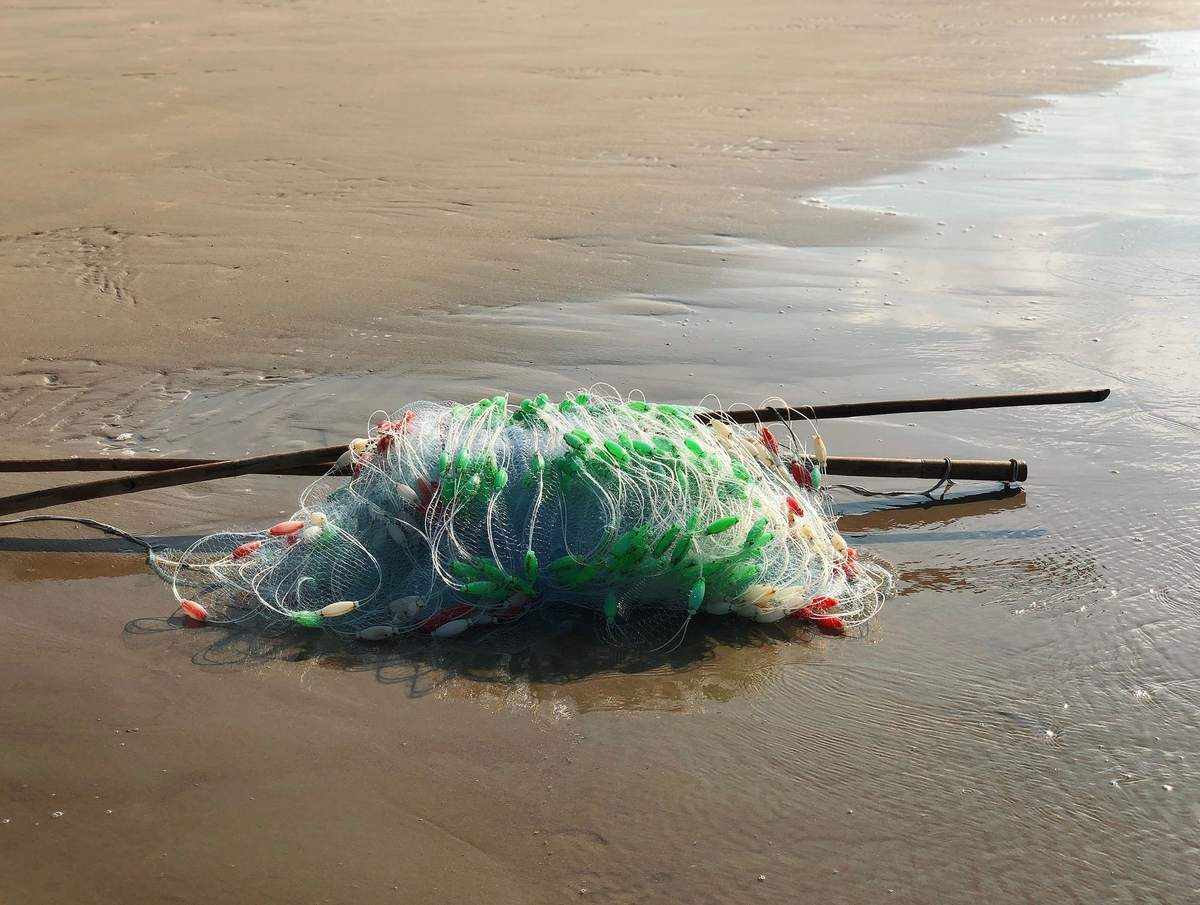
By weight, large items dominate the patch: nets, ropes, crates, buoys, bottles and hard fragments. By count, microplastics dominate: the small fragments those large items become over the years.
We tend to focus on what we recognise, the bottles, the bags, the visible piles. My interest in science pulls me to the next question: what happens as those things break into smaller pieces? You can, in principle, lift a net out of the water. You cannot recover microplastics once they spread through open ocean, and they are the form in which plastic enters food chains. Every large item left in the gyre becomes thousands of small ones.
Where the plastic comes from
Two main routes feed the patch.
From the sea. A 2022 follow-up study by Lebreton and colleagues analysed more than 6,000 hard plastic items over 5 cm collected from the patch in 2019. It concluded that most floating material comes from fishing and traced most identifiable items to five industrialised fishing nations: Japan, China, South Korea, the United States and Taiwan. The team analysed nets and ropes separately and left them out of that sample, so fishing's share of the total is larger still.
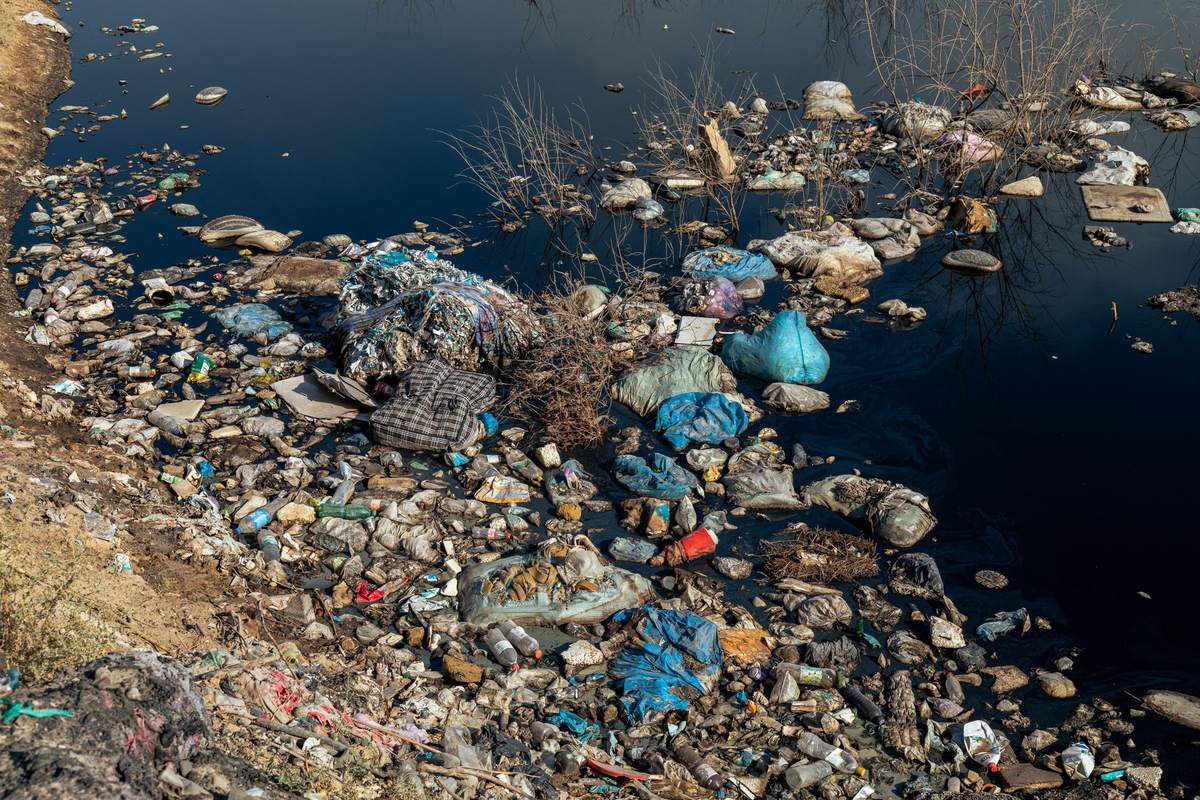
From land, mainly through rivers. A 2021 study in Science Advances by Meijer and colleagues modelled how plastic reaches the ocean from land and estimated that more than 1,000 rivers account for about 80% of river-borne plastic emissions. Many are small and medium urban rivers in South and Southeast Asia. The model ranked the Philippines first, followed by India and Malaysia. That ranking is a model output based on 2015 data, not a measurement, and people in the Philippines have challenged it.
So the patch is where two problems meet: lost and discarded fishing gear far offshore, and everyday plastic leaking from cities with weak waste collection. Product design, collection and recovery on land belong to the ocean story as much as anything at sea.
Can anyone clean it up?
Clean-up at sea works for large items, and some organisations remove plastic from the patch with towed barriers. The difficulty is scale and timing. The gear has to cover an area larger than many countries, and every year the large pieces it misses break into fragments no net can catch.
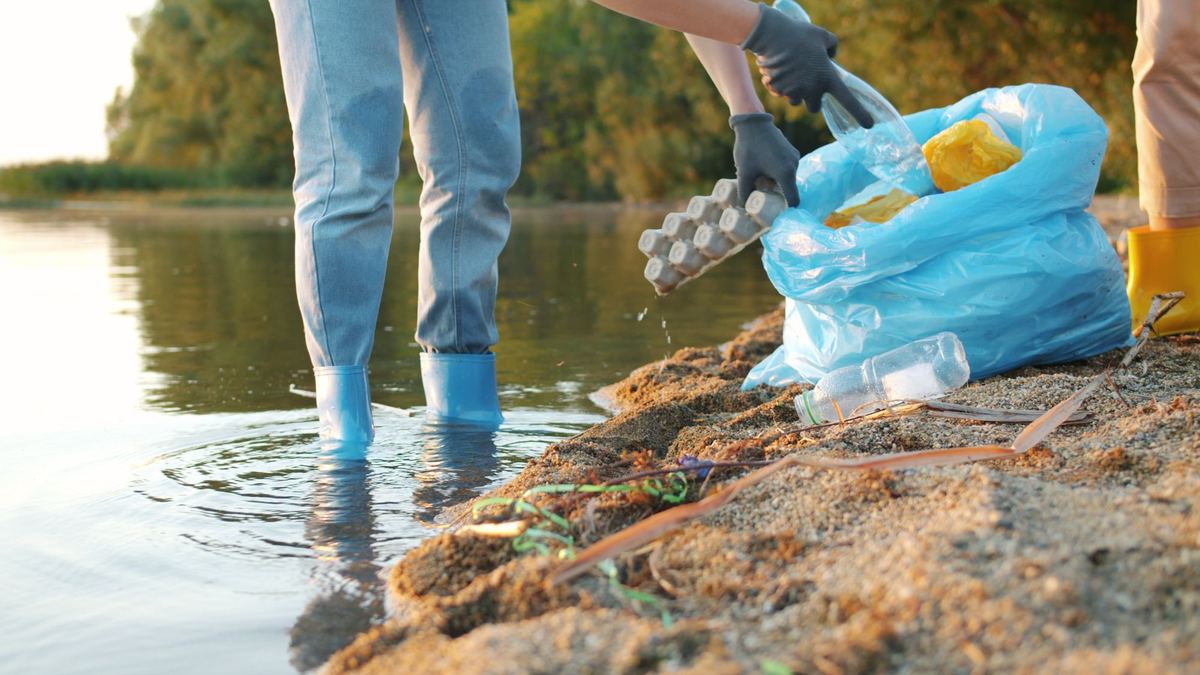
I see a role for clean-ups. I have done them myself since I was young, and recording what we collected made us ask where each piece came from, how it reached the beach and what would happen if nobody picked it up. But my priority is stopping plastic before it reaches the sea. Otherwise communities clear the same places again and again.
Prevention has several parts:
Fishing gear: marking gear so people can trace it, port facilities that take old nets back, and rules against dumping.
Rivers: barriers and interceptors on the most polluting rivers, and better collection in the cities upstream.
Waste collection on land: in many coastal cities nobody collects low-value plastic such as sachets and films, because nobody pays for it. Collection programmes, sometimes funded through extended producer responsibility schemes or plastic credits, try to close that gap.
Less plastic in the first place: reuse, refill and simpler packaging that recyclers can process.
Two of our partner projects work on the land side. We have visited OAR in India several times. What stayed with me was the energy and commitment of the people, and how they bring informal waste workers into community collection. Honest Ocean in Indonesia links collection and sorting with recycled resin production and material traceability, so you can follow the plastic after someone has collected it. That whole journey is what I want to understand.
The patch took decades to build. Most of the work that slows it happens on land: better design, reliable collection, reuse and recycling. Businesses and communities can support that work today.
The Reclaim Earth newsletter
Follow the plastic, not the promises.
One email a month on plastic recovery.
Updates from our partner projects, plain-English explainers on plastic credits, and the questions worth asking of any plastic claim. Free, and you can unsubscribe at any time.
Sign-ups are handled by Substack. See Substack's privacy policy, our privacy notice and our cookie notice.
Frequently asked questions
Is the Great Pacific Garbage Patch an island?
No. It is an area of ocean with a high concentration of floating plastic, most of it in pieces too small or scattered to form anything solid.
Can you see the Great Pacific Garbage Patch from space?
No. NOAA says satellite and aerial photographs cannot show it.
How big is the Great Pacific Garbage Patch?
A 2018 study estimated about 1.6 million km², roughly six and a half times the size of the UK, holding at least 79,000 tonnes of plastic.
What is the Great Pacific Garbage Patch made of?
By weight, mostly larger debris, with fishing nets alone at least 46%. By number of pieces, 94% are microplastics.
Are there other garbage patches?
Yes. Plastic gathers in gyres in other oceans too, and NOAA notes there are many garbage patches rather than one.
Sources
- NOAA Marine Debris Program, Garbage patches
- NOAA Ocean Today, Trash Talk: What is the Great Pacific Garbage Patch?
- NOAA, "'Garbage Patches': What we really know"
- Lebreton, L. et al. (2018), "Evidence that the Great Pacific Garbage Patch is rapidly accumulating plastic", Scientific Reports
- National Geographic Education, The Great Pacific Garbage Patch isn't what you think
- Lebreton, L. et al. (2022), "Industrialised fishing nations largely contribute to floating plastic pollution in the North Pacific subtropical gyre", Scientific Reports
- Meijer, L. et al. (2021), "More than 1000 rivers account for 80% of global riverine plastic emissions into the ocean", Science Advances; overview in Our World in Data
- Asia News Network, "Is the Philippines really the world's No. 1 source of ocean plastic pollution?"
Published by Reclaimed Earth Limited (Companies House 17392812), which works with plastic recovery projects in India, Indonesia and the Philippines and has a commercial interest in plastic credits. OAR and Honest Ocean are Reclaimed Earth partners. Edited with the Reclaimed Earth editorial team. Last updated 19 October 2026.